
Retail investors trust individuals, but lack a way to verify performance. What’s missing is an auditable track record, so capital follows evidence, not popularity.

Alissa Clausius
August 13, 2026 · 19 min read

A majority of younger investors now act on advice from people they follow on social media, and the share is rising. The problem is not that skilled traders don't exist on these platforms, some demonstrably do, and occasionally the anonymous forum beats the institution. The problem is that followers have no way to tell who they are. The one trait audiences rely on to choose whom to trust, audience size, shows no relationship to performance, and portfolios built by copying popular influencers underperform the market over full cycles. Artificial intelligence is widening the gap, because models trained on the internet optimize for narrative over fundamentals, a problem regulators have now named directly. The piece that is missing is verification: an auditable, dated record of what each voice recommended and what it returned. Until that record exists, a growing pool of retail capital is allocated on the basis of confidence rather than evidence.
The clearest measurement of this shift comes from the FINRA Investor Education Foundation, which published "Finfluencer Followers and Social Media Scrollers" on April 2, 2026, using data from the 2024 National Financial Capability Study. The generational split is stark. Among investors aged 18 to 34, 61% reported making an investment decision based on a recommendation from a social media personality. Among investors 55 and older, the figure was 6%. Roughly 60% of the younger group use social media to inform investing decisions at all, against 9% of the older group.

For younger investors, influencer input is now routine and often a default step before acting. The same study found that social media users consult more information sources than non-users, an average of 7.6 against 4.0, and are more likely to check the background of a financial professional, 36% against 14%. What emerges is an audience that is engaged and actively gathering information from a new set of sources.
The reasons they give for investing are worth reading closely, because they reframe what the influencer economy actually competes with. In the FINRA data, 59% of social media users cited entertainment as a motivation, against 18% of non-users. 59% percent cited the social experience, against 11%. Sixty-six percent said investing was a way to support their personal values, against 31%. Close to half did not see themselves as a typical investor. The attention market is closer to entertainment than research, and financial creators are winning by matching entertainment formats and incentives.
The same survey measured how well these investors understand investing, and the answer complicates the picture. Social-media-informed investors answered an average of 42% of objective knowledge questions correctly, yet 63% rated their own knowledge as high. That gap between measured competence and self-assessment is the surface that fraud exploits. Among investors who were targeted by an investment scam, 68% of social media users reported losing money, against 29% of non-users.

When researchers ask which platform investors actually use, Youtube consistently ranks first. In Amundi's 2025 "Decoding Digital Investment" survey of more tha n 11,000 retail investors across 25 countries, YouTube was the most influential social platform for investing information at 72%, ahead of Instagram (49%) and Facebook (46%). Fidelity International's 2026 "Be Invested" study found the same ordering in the UK, where 36% of social-media-informed investors named YouTube, more than any other platform. Academic work has followed the money: a 2025 study in the Journal of Theoretical and Applied Electronic Commerce Research found a direct relationship between YouTube channel influencers and their viewers' equity decisions, mediated by perceived credibility and trust rather than by any measure of results.
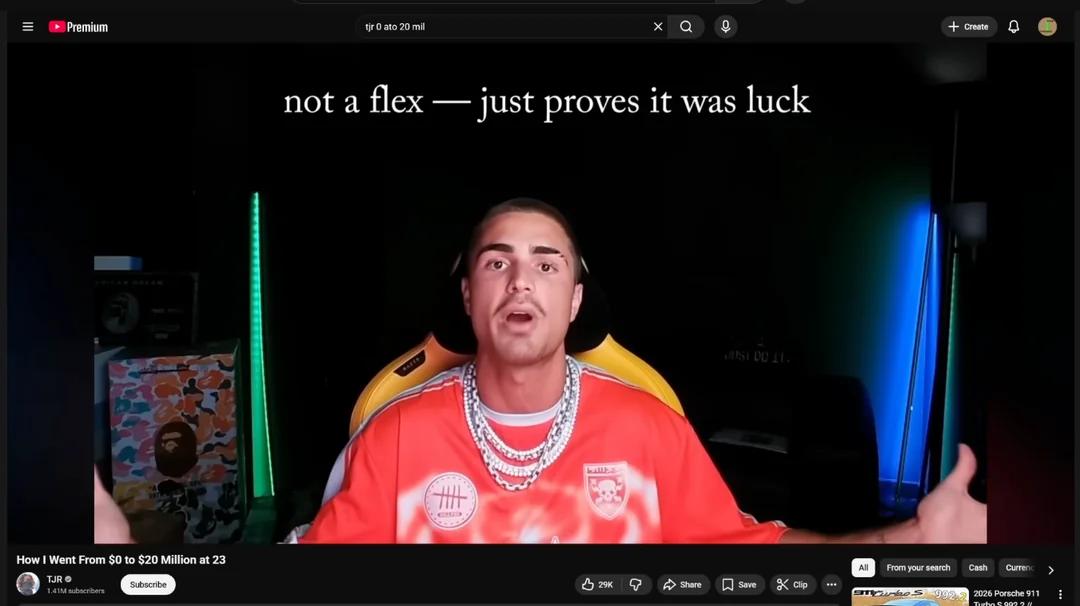
The financial establishment tends to respond the same way. Professionals expect the crowd to be outmatched, and they expect the outcome to be painful. The evidence is mixed, with real signal in some crowd settings and clear underperformance in others. That is what makes the problem hard.
In 2024, Tolga Buz and Gerard de Melo of the Hasso Plattner Institute published "Democratisation of retail trading" in the Journal of Business Analytics. They analyzed more than 1.6 million posts from Reddit's WallStreetBets over three and a half years, extracted trading signals for every stock in the S&P 500, and compared them against more than 16,000 recommendations from the twenty largest investment banks. Their finding was that WallStreetBets' average returns competed with the best of the banks, beat many of them outright, and outperformed almost all of them at the specific task of identifying top-performing stocks. The authors concluded that the forum can function as a freely accessible and genuinely useful source of investment advice.
The aggregate crowd, in other words, holds real signal. That conclusion needs a caveat the authors are clear about: WallStreetBets concentrates on high-risk, high-reward positions, and the accuracy of its buy signals sits in a range, roughly 50% to 67% depending on the window, rather than at a level that guarantees outcomes. The findings indicate that access to usable investment information has meaningfully broadened. Sometimes the anonymous forum is right where the institution is wrong. That is exactly why the next finding matters so much.
A crowd in aggregate is a different object from the individual influencer a follower chooses to trust. When researchers measured the second thing over a full cycle, the result reversed.
In 2026, Leon Kirschbaum, Martin Keiper, Marius Mölders, and Henning Zülch of HHL Leipzig published "Amplifying noise or delivering alpha?" in Finance Research Letters. They assembled 1,056 stock recommendations from 44 Instagram-based finfluencers across Germany, Austria, and Switzerland, covering January 2019 to October 2022, and built portfolios that replicated what a follower would actually hold. Over the first 30 days, the recommended stocks returned about 1.2% above the benchmark, a small but statistically significant gain. Over one year, that outperformance disappeared. Over three years, the portfolios underperformed the market by roughly 7% on a cross-sectional basis and close to 13% on a calendar-time basis, with higher volatility, deeper drawdowns, and lower risk-adjusted returns than the benchmark. Followers absorbed more risk and received less for it.

The most consequential result was almost incidental to the study's main question. The authors tested whether any observable trait predicted which influencers actually delivered returns, looking at follower count, posting frequency, and account age. None of them did. The size of an influencer's audience carried no information about the quality of their recommendations. The authors' summary was that finfluencer recommendations function "more as digital financial entertainment than as a reliable source of alpha."

The implication is uncomfortable and specific. The most visible signal available to anyone deciding whom to follow, the follower count itself, is the signal least connected to whether following them pays. Audiences select influencers on charisma, consistency, and production quality, because those are the traits the platform surfaces. Performance is not surfaced, so it does not factor into the choice.
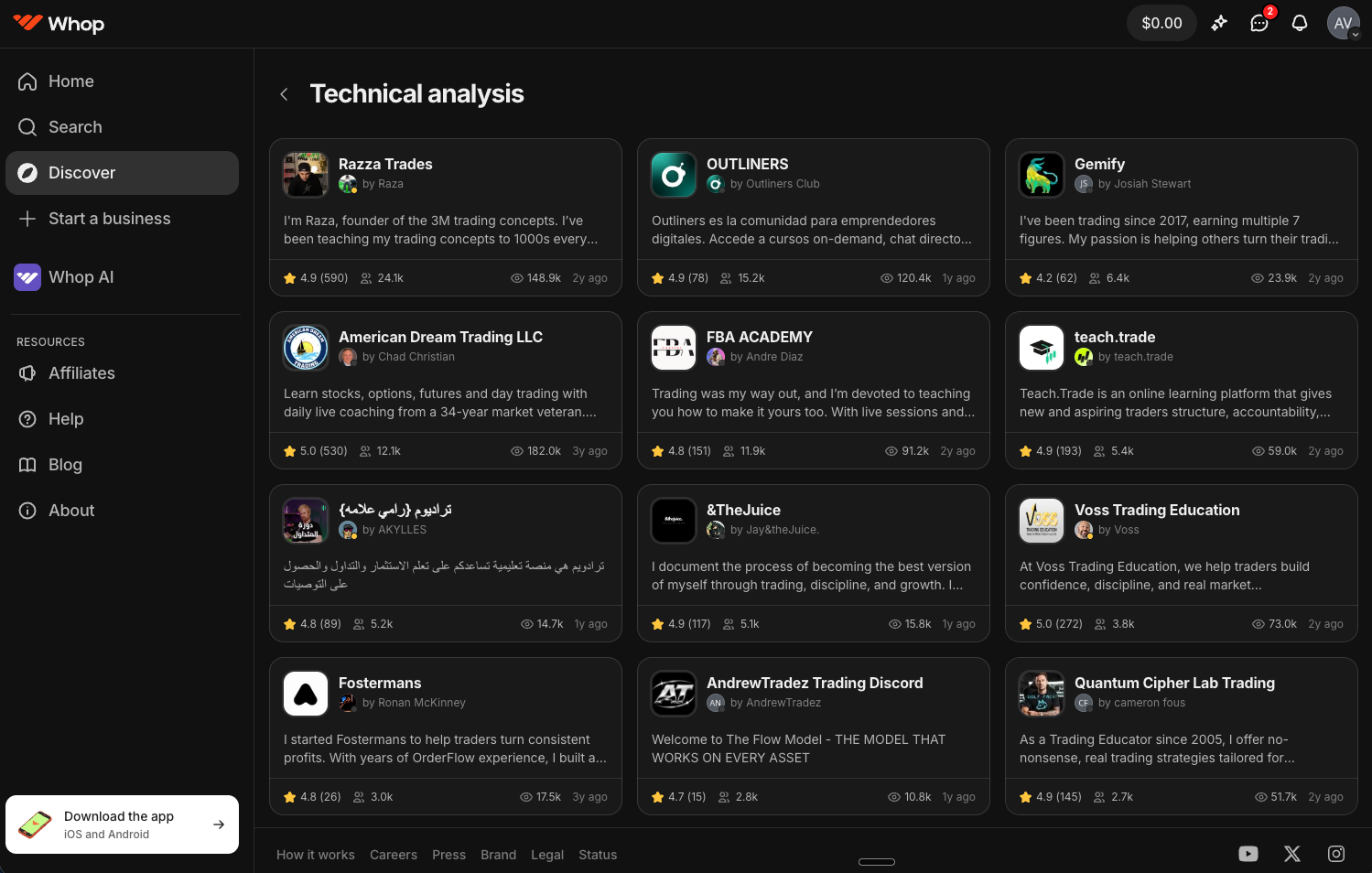
None of this would scale without a business model, and the business model has matured into infrastructure. The clearest example is Whop, a marketplace built to let creators sell access to gated communities. By early 2026 the platform had passed 18 million users and more than 183,000 sellers. Trading communities are one of its largest categories. A creator connects a Discord server or other channel, sets a monthly price, and Whop gates entry and handles billing; members pay anywhere from tens to hundreds of dollars a month for signals, live sessions, and a room full of other subscribers. Individual trading rooms on the platform carry thousands of paid memberships and hundreds of reviews.
The operator is paid to retain subscribers, not to be right. A room that is entertaining and wrong out-earns one that is dull and correct, because churn responds to experience and not to a P&L the buyer never sees. The lifestyle marketing that surrounds these rooms follows directly from that incentive.

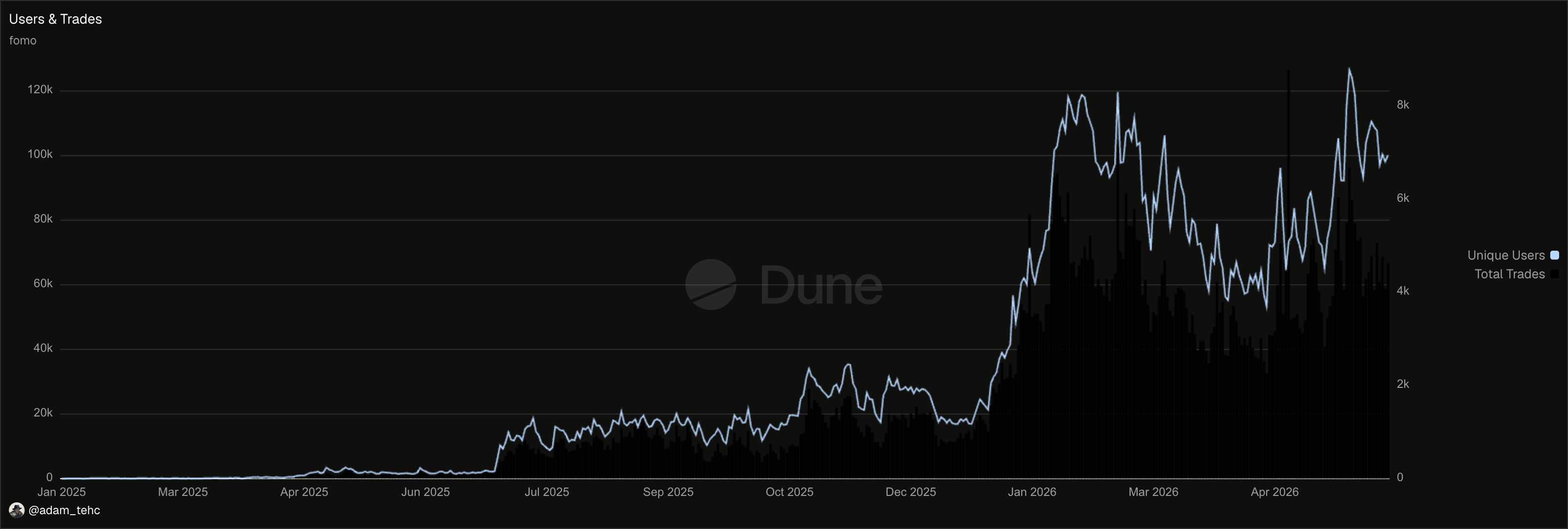
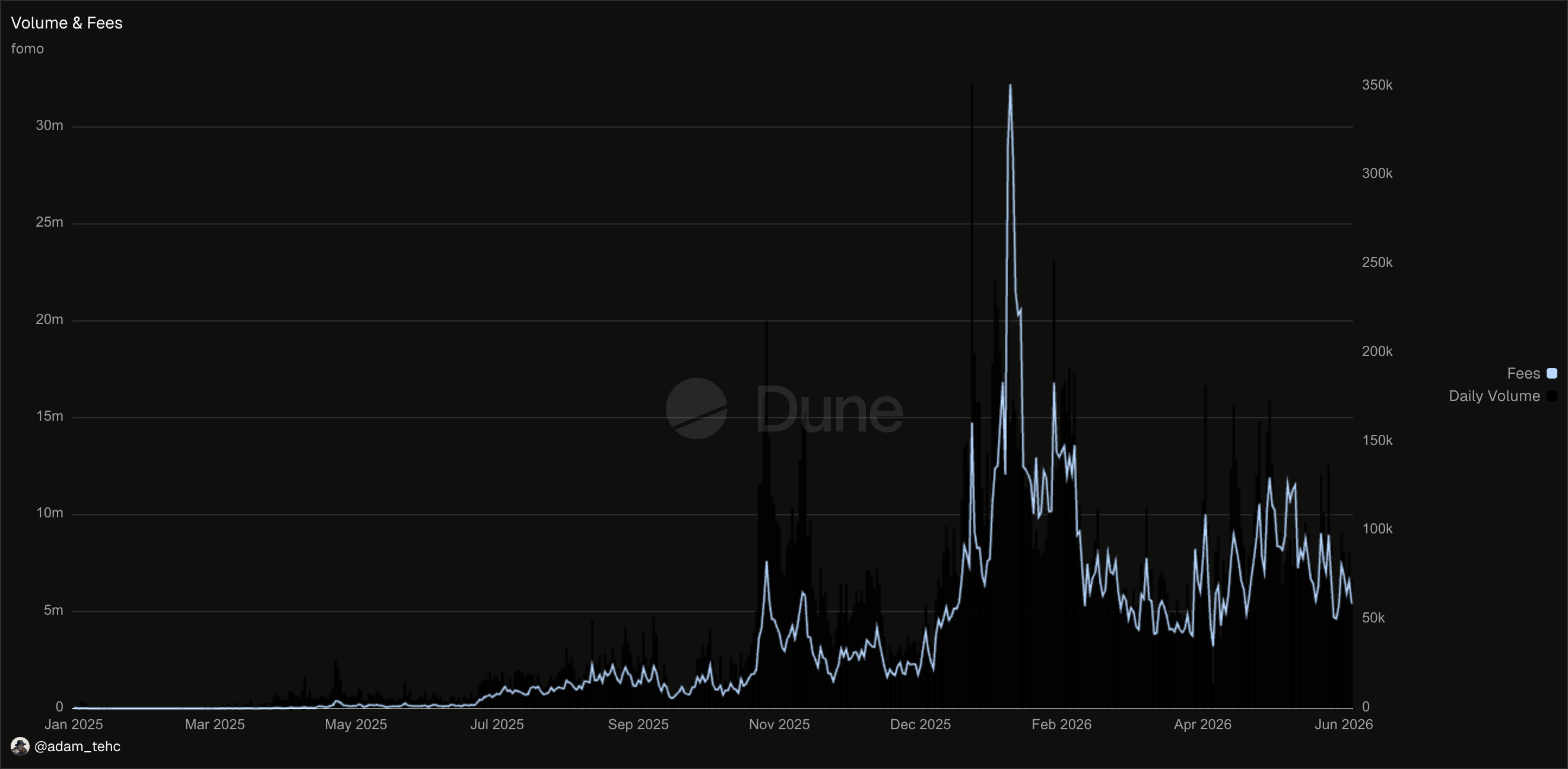
The interface of retail investing is being rebuilt to reflect the shift from a chart-centered experience to a people-centered one. Social trading app fomo onboarded roughly 400,000 users in its first year after launching in early 2025. To date fomo has facilitated about $4.4 billion in cumulative trading volume, and processed around $19 million in fiat inflows through Apple Pay. Users follow traders by username, watch their positions in real time, and execute from the same screen. Robinhood has begun testing a social feed with verified trade sharing, and X has experimented with "Smart Cashtags" that surface live prices when a user types a ticker. The convergence runs in both directions, with crypto-native apps adding social layers and social platforms adding financial ones.
A 2025 Galaxy Research report on social trading highlights three recurring risks that closely map to the academic findings. The first risk is herding. When activity is visible and one tap from execution, less experienced users overweight the actions of popular accounts, and the feedback loop compresses to seconds. The second is what is referred to as the exit liquidity problem. A trader who enters early benefits from the wave of followers who buy in behind them, and absorbs none of the impact when they sell. A popular trader's "PnL is partially a function of audience size, not just skill." That is the Kirschbaum finding expressed in product terms, with the same logic surfaced by the interface. The third risk is transparency. A trader can build a position in a hidden wallet, then buy on a public wallet to signal conviction. Followers pile in, the trader sells into that liquidity, and only later closes the visible position. This multi-wallet pattern is straightforward to execute and difficult for followers to detect.
Each of these risks shares a root cause. Capital follows attention, and attention is a poor proxy for skill. The system rewards the trader for being watched, and gives the follower no reliable way to tell whether being watched is deserved.
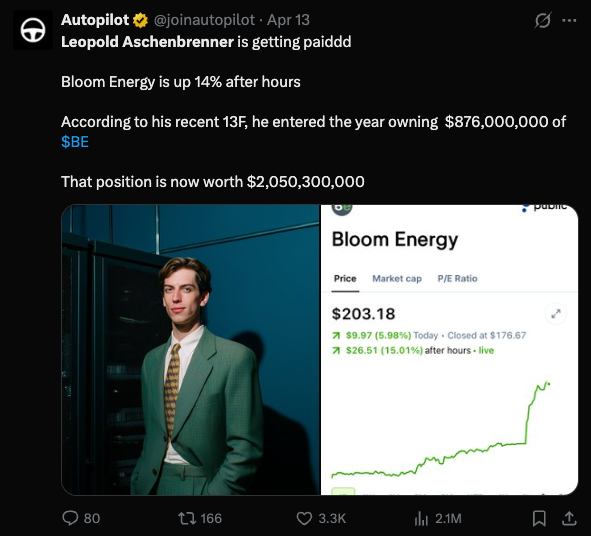
The same dynamic now operates on the portfolios of the famous. On X, a famous investor’s portfolio screenshot is viral shorthand for “buy what they buy.” One of the most-shared examples in 2026 was the debut 13F of Situational Awareness, the AI-infrastructure fund started by former OpenAI researcher Leopold Aschenbrenner, whose roughly $5.5 billion in disclosed long equity positions circulated as a portfolio to mirror. Alongside that long book, the same filing disclosed billions of dollars of put options against chipmakers, a hedge that inverts the simple long-the-AI-trade story the pie chart tells. Copying the picture means copying a directional bet the fund itself was paying to insure against, and a 13F is backward-looking by up to forty-five days regardless. The posts people act on are partial and stale by construction.
The behavior has been productized as well. Autopilot, an app that automatically mirrors the disclosed trades of public figures, has drawn over $1.1 billion from more than 180,000 users, and its "Pelosi Tracker" account on X passed a million followers by turning one politician's filings into a portfolio anyone could clone with a tap. Warren Buffett, congressional filers, and a rotating roster of public names are packaged the same way. The product is real and the disclosures are genuine, but what is missing, again, is any verified record of whether mirroring a given portfolio actually pays once fees, timing lag, and the positions that never reach the chart are accounted for.
The newest input into this system is the model. Asking an AI assistant what to buy feels like an upgrade over following a person, because it carries the appearance of objectivity. The mechanics work against that impression. Large language models are trained on text from the internet, and the loudest signal in that text is narrative, the same attention-driven story that the finfluencer studies show reverses over longer horizons. A model asked what looks attractive will reflect what is being discussed, which is a measure of attention rather than value.
Regulators have started to say this directly. On June 17, 2026, Wu Qing, the chairman of China's Securities Regulatory Commission, warned against speculating on technology hype and using AI for stock picking, and said the regulator would investigate and punish the practice of riding hot technology themes to inflate stock concepts, alongside market manipulation and insider trading. The CSRC said it would issue guidance on the use of AI in capital markets, targeting the illegal use of AI tools to generate stock recommendations and the spread of AI-enabled rumors (CNBC, June 17, 2026). The context was a Chinese AI-themed equity index that had risen nearly 30% over the year against roughly 6% for the broad CSI 300, a divergence that reads more as momentum than as collective insight.

The concern is not confined to China. Germany's BaFin issued a transparency factsheet for finfluencers in January 2026. The UK's Financial Conduct Authority tightened its rules on financial promotions in 2023. The European Securities and Markets Authority and the International Organization of Securities Commissions have both warned that many finfluencer tips legally qualify as investment recommendations and can harm retail investors. The regulatory response is broad and roughly simultaneous across major markets, which indicates a structural problem rather than a local one. Regulation also arrives late and operates bluntly. It can sanction the worst actors once the damage is already done.
Around this has grown an entire layer of tools that promise to quantify the noise, and most of them end up measuring attention with more precision rather than measuring skill at all. Kaito, the most prominent, runs what it openly calls an attention market. The platform scores the "mindshare" of tokens and the influence of commentators, ranking who is being talked about and who is doing the talking. On-chain, platforms like Nansen label more than 500 million wallets and surface "smart money," while tools such as GMGN let users follow and copy the wallets of named influencers trade by trade. Beneath the established names sits a long tail of vibecoded dashboards, many little more than a language model pointed at a social feed, that provide a sentiment score or a KOL leaderboard and call it alpha.
Each of these is genuinely useful for the question of what is being discussed and by whom. None of them answers the question that actually matters to someone deciding whether to follow a voice: over a full cycle, with entries and exits dated and marked against what happened, did this person deliver? Mindshare, smart-money labels, and copied wallets are all proxies for visibility and recent flow. They sharpen the measurement of attention, but they do not close the gap between attention and result.
Stepping back, the core issue is accountability. A large and growing system distributes financial advice to hundreds of millions of people, and almost none of it is verifiable. Retail investors are often capable and engaged, but they are forced to make decisions without an auditable record of what any given voice recommended and how it performed. Influencers range from well intentioned to opportunistic, and the incentives reward attention and narrative. AI amplifies the same dynamic by reflecting the loudest stories in its training data.
The signal that audiences actually use, follower count and the confidence of the delivery, is the one the research shows is disconnected from results. The signal that would matter, a complete and dated record of what a voice recommended and what it returned, is the one the system is built to obscure. Influencers display their wins and omit their losses. Platforms rank by visibility rather than by accuracy. Followers are left without a way to distinguish the rare genuine edge from the abundant cherry-picking and entertainment.
This points to where the next phase of social investing has to develop. The need is a verification layer beneath the layer of commentary that can take any voice making market claims and produce an auditable record of every position shared publicly, matched against what happened, attributable, and resistant to quiet edits and deletions. Strip away the fluff and measure whether the person delivered. That capability would convert a follower count back into a track record and give a retail investor a basis for trust that survives contact with the data.
The migration of financial trust to individuals is here to stay. The FINRA generational data makes the path forward clear, and platforms are building to accelerate it. The open question is whether the verification layer gets built at the same pace as the distribution layer, or well behind it. Centaur is building the verification layer to close this gap, converting noisy social media streams into an auditable public record of true trading performance.
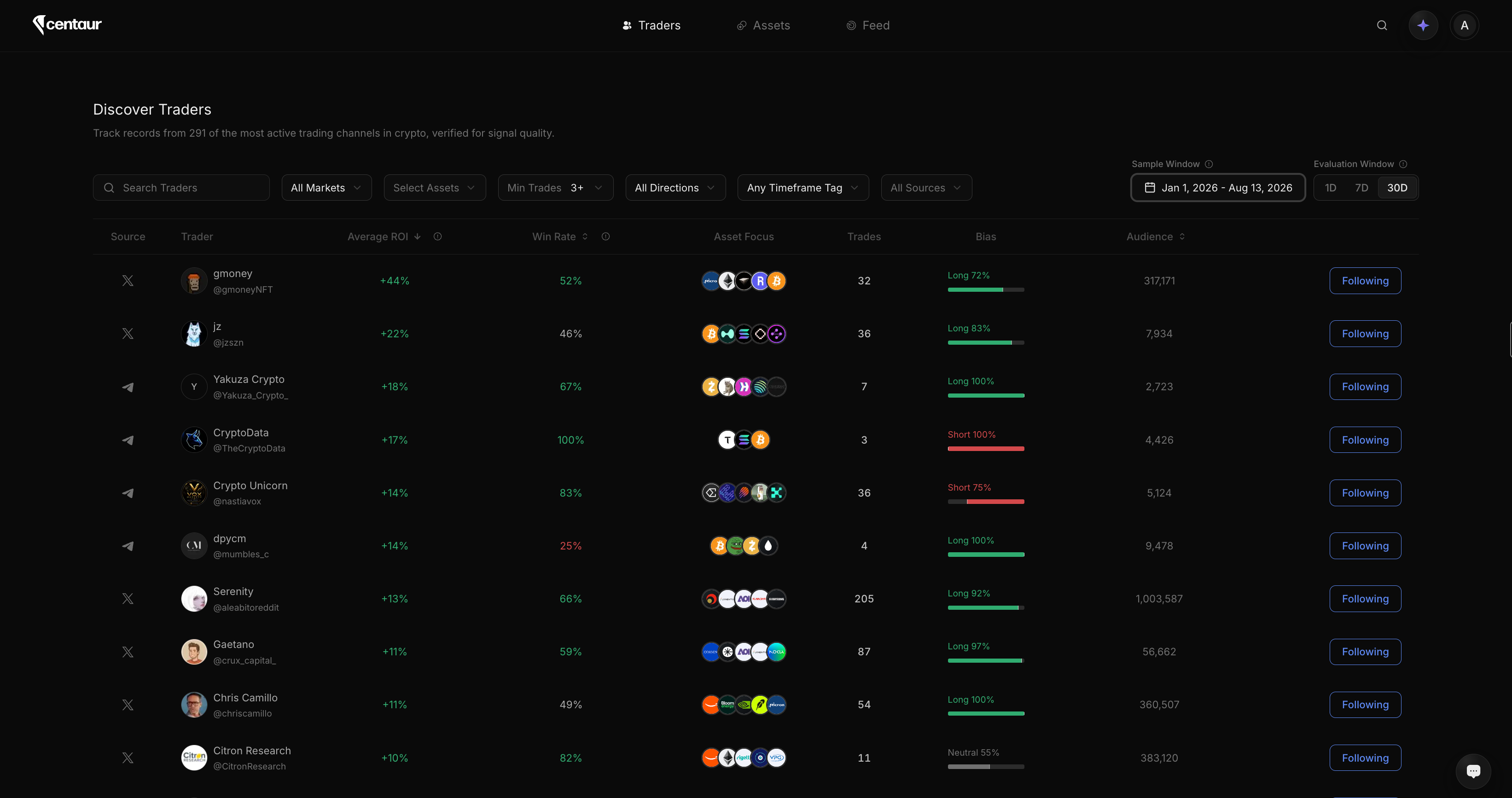
Centaur captures trading calls from the strongest voices across markets and uses a proprietary ML model to translate posts and messages into structured trades. The output is a living public record that shows performance over time, key stats, and each trader’s current positioning. Each trade links back to the original post where it was shared, with timestamps, entries and performance captured in one auditable record.
Find your next trade centaur.io
Sources: FINRA Investor Education Foundation, "Finfluencer Followers and Social Media Scrollers" (April 2, 2026), drawn from the 2024 National Financial Capability Study. Buz and de Melo, "Democratisation of retail trading," Journal of Business Analytics, vol. 7, no. 4 (2024). Kirschbaum, Keiper, Mölders, and Zülch, "Amplifying noise or delivering alpha?", Finance Research Letters, vol. 103 (2026). Galaxy Research note on social trading (2025). CNBC reporting on the China Securities Regulatory Commission (June 17, 2026). Additional sources for this revision: Amundi, "Decoding Digital Investment" (2025); Fidelity International, "Be Invested" Global Study (2026, reported by IFA Magazine); Whop platform metrics (Sacra and Sourcery, 2025–2026); Autopilot / "Pelosi Tracker" figures (Fox Business and Yahoo Finance, 2025); Situational Awareness LP Q1 2026 13F (Insider Monkey and Yahoo Finance, 2026); product descriptions from Kaito, Nansen, and GMGN.

