
Robinhood launched Social and Agents on 29 September 2026, then imported third-party data for both. The layer still missing: live positions shared publicly by the world's best traders.

Centaur · Research
October 29, 2026 · 4 min read
On 29 September 2026, Robinhood took Robinhood Social live for every eligible US customer and announced Robinhood Agents. These two launches show the way for every exchange, trading app and agent builder that wants to win rather than get left behind.
Robinhood Social is at its core a feed of trades taken and shared by other Robinhood traders. Trader profiles, position P&Ls and entries are verified against actual Robinhood accounts. Users can take the trade straight from the feed.
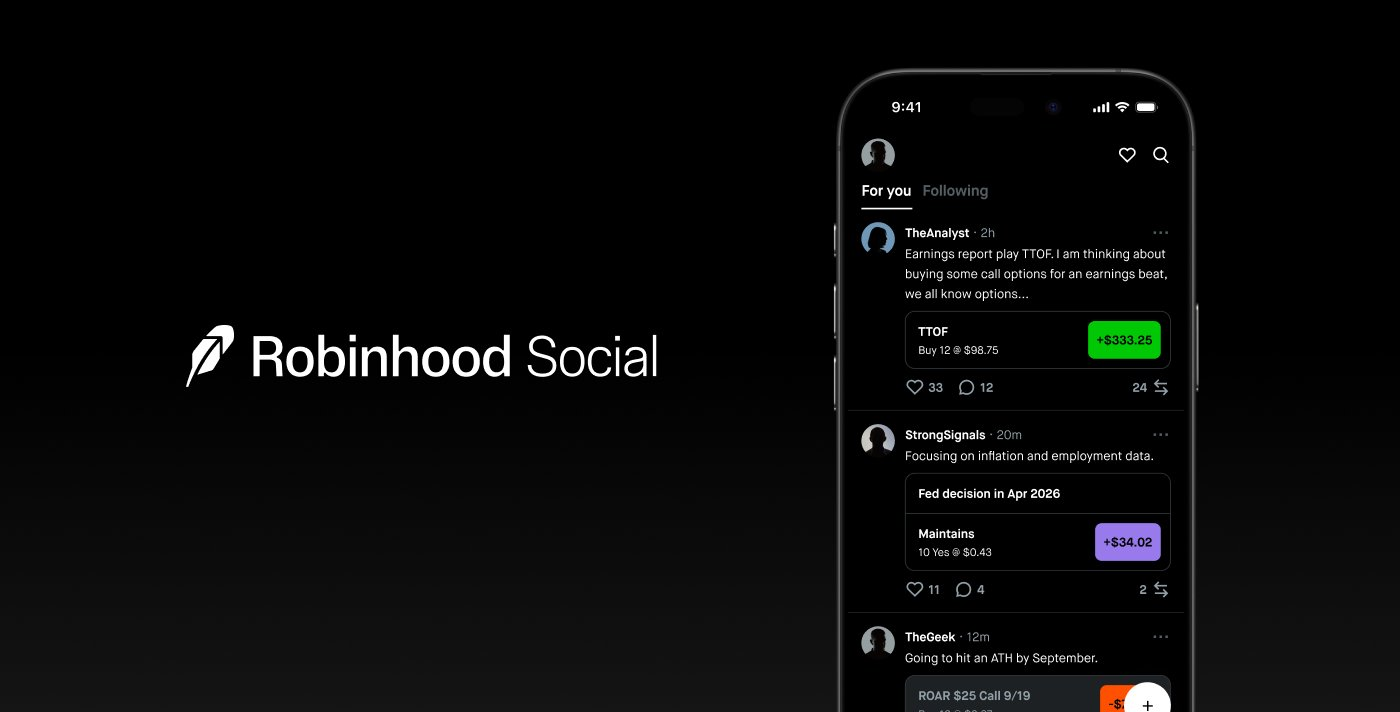
Robinhood Social feed.
Social is overlaid with third-party public data: insider, politician and hedge fund trades from TipRanks. Robinhood Agents, announced the same day, goes further. Users can subscribe to eleven paid Agent Apps, from Unusual Whales' options flow to Quiver Quantitative's congressional trades to ChatterFlow's social chatter, so their agents trade on more than Robinhood's own data.
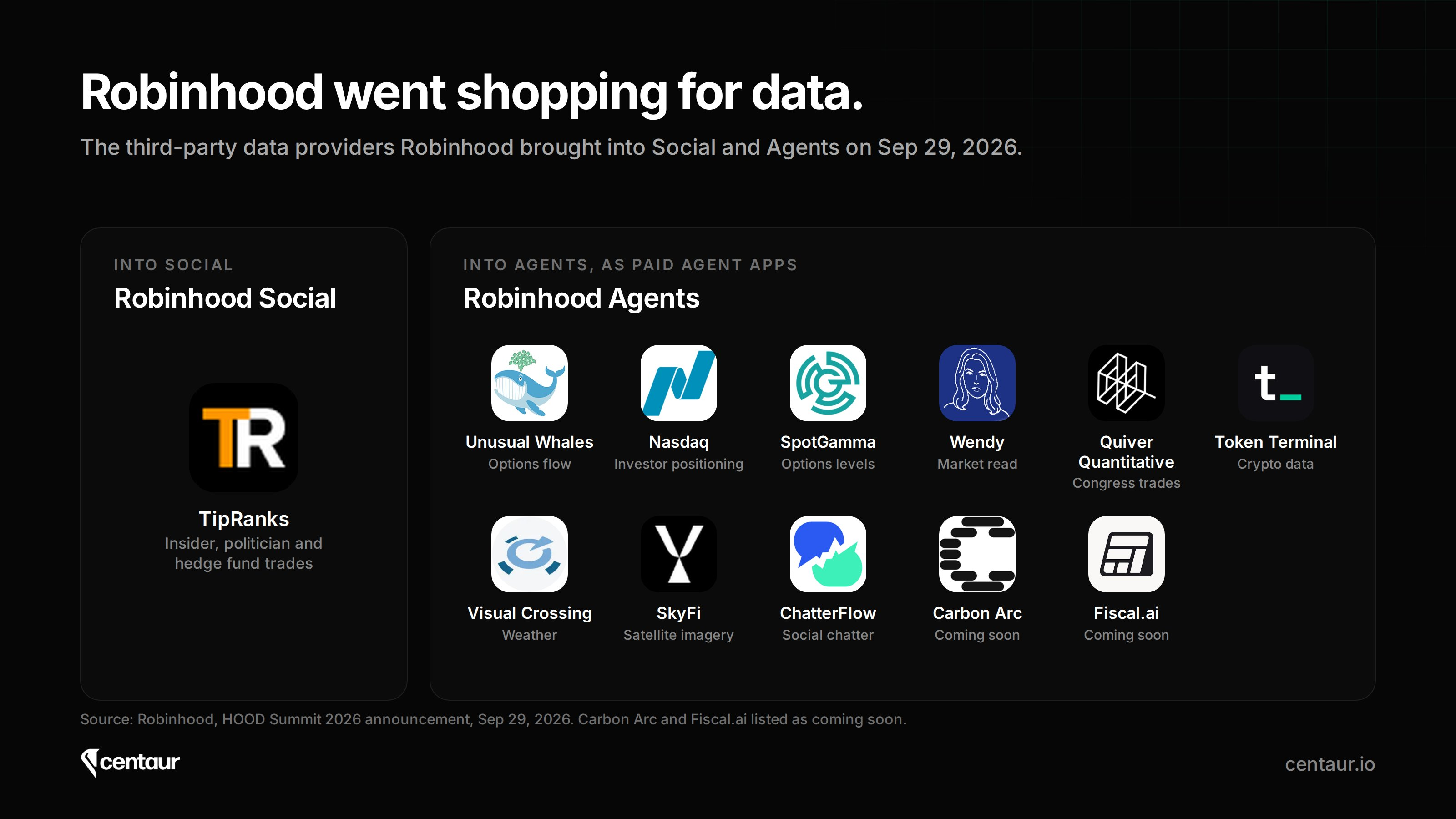
Robinhood went shopping for data.
A verified trade feed needs a social graph, and social graphs are the hardest cold start in consumer software. Especially in trading: there have been countless copy-trading attempts, but very few have achieved sufficient scale. Over 100 crypto social trading apps have launched; Fomo is the only one that has thrived.
Even Binance spent years and heavy funding subsidising Square with creator funds and fee sharing on live trades. It claims 35 million monthly users, yet few would call Square a success.
Robinhood can attempt this because it has a tremendous product, a die-hard community, and one of the most widespread distribution networks. Most trading venues cannot compete.
The most telling part of this story is that even Robinhood, which will build a verified feed most venues could only dream of, has still chosen to import data from third-party alternative data providers: filings data into Social, eleven providers into Agents.
The reason is structural. An internal graph only sees its own users. That means it will also necessarily miss relevant context and data from the outside: what the brightest minds are discussing on X, trading data from other venues, and much more. Even when the internal data is the differentiator, third-party data still elevates the trading experience.
Every source Robinhood imported is one of three things:
All three are highly relevant, but in Centaur's view they still miss one of the most interesting and valuable datasets one could ask for: a live feed of positions shared publicly by the world's best traders.
That is what Centaur builds. It tracks the best traders on X like wallets. Every post becomes a position, with asset, direction, entry, open and close, scored over time. As of 28 October 2026, that covers 300 traders, more than 1,700 assets, 25,000+ historical positions and roughly 170 trade events a day, across stocks, indices, commodities and crypto.
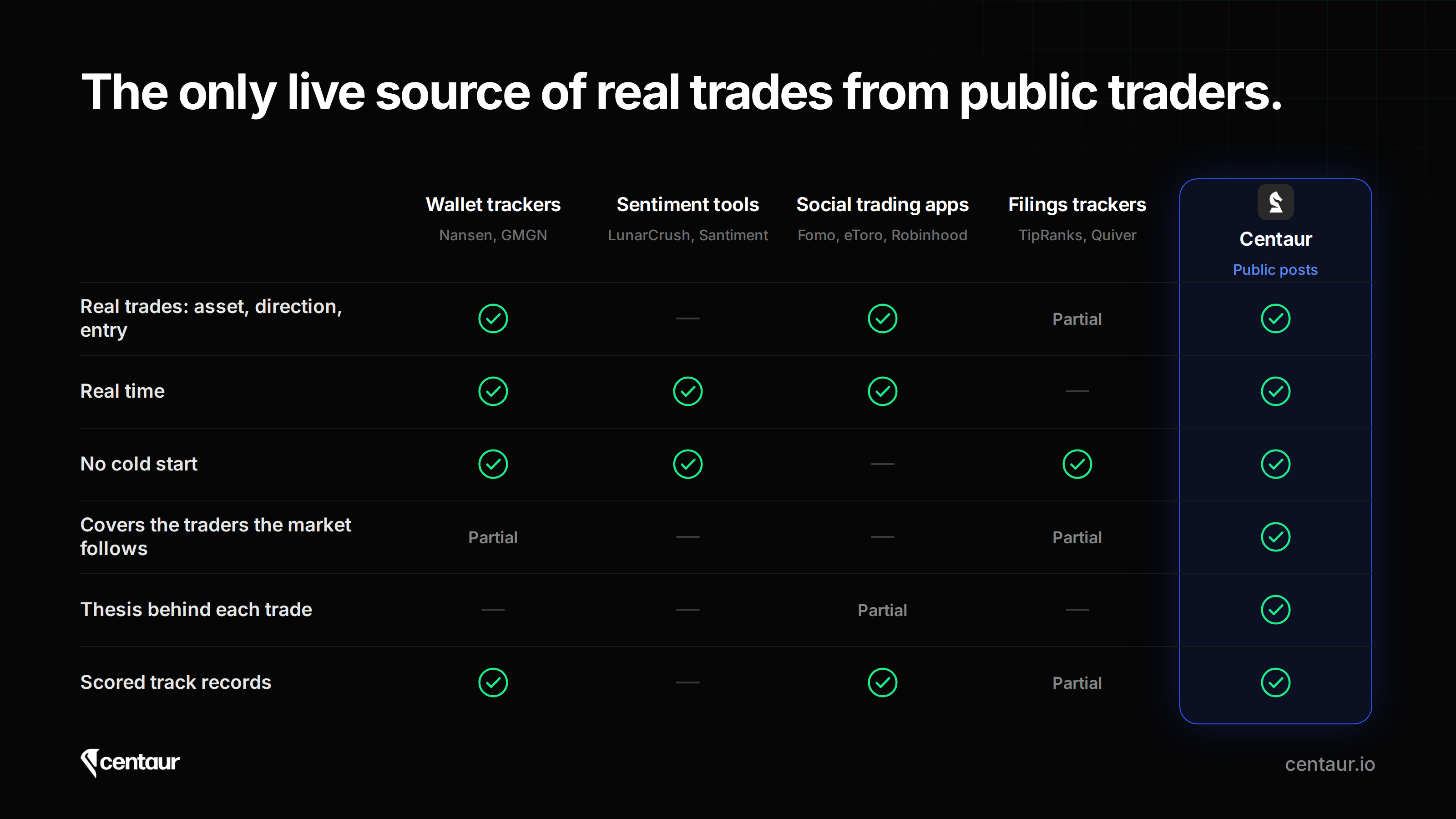
The only live source of real trades from public traders.
Exchanges and apps: a live trade feed, long/short positioning on every asset page, and leaderboards with one-click copy, from day one. No cold start. The best trades on X help generate volume on your book.
Agents: scored, timestamped positions over API and MCP. Robinhood just showed where agents are going: they need access to third-party alternative data. Trade-level signal from public traders is a highly differentiated input and, in Centaur's view, the most relevant one.
Funds: every resolved position, timestamped and scored, for your own backtests and strategies.
Robinhood built the feed and then went shopping for the rest. Any trading app can now enable social trade discovery with a few lines of code, starting from the Centaur API docs.

